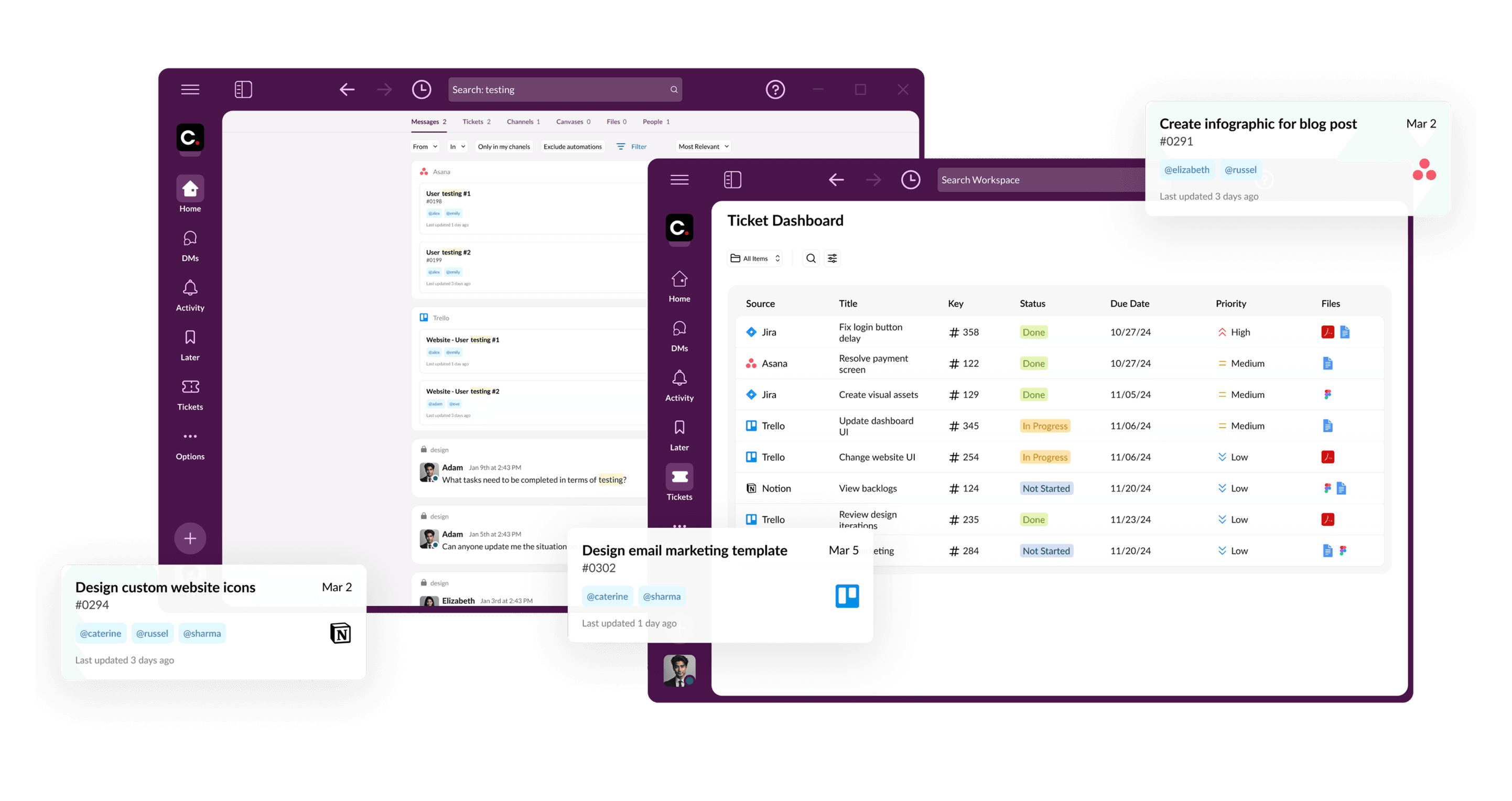
Centralizing task management and communication within Slack
TIMELINE
TIMELINE
Jun - Apr 2025
Jun - Apr 2025
RESPONSIBILITIES
RESPONSIBILITIES
Responsive Website
Responsive Website
MY ROLE
MY ROLE
Product Designer
Product Designer
BACKGROUND
There is no single place to find the complete picture
There is no single place to find the complete picture
Product managers waste time piecing together task status across Jira/Linear/Asana, Slack, Docs, and Sheets—no single source of truthThis makes it difficult for the teams to stay aligned and informed slowing down progress and collaboration across teams.
Product managers waste time piecing together task status across Jira/Linear/Asana, Slack, Docs, and Sheets—no single source of truth.
This makes it difficult for the teams to stay aligned and informed slowing down progress and collaboration across teams.
Product managers waste time piecing together task status across Jira/Linear/Asana, Slack, Docs, and Sheets—no single source of truth.
This makes it difficult for the teams to stay aligned and informed slowing down progress and collaboration across teams.

Aaron
SENIOR PRODUCT MANAGER
"The core issues is the absence of a reliable source of truth causing teams to operate on different information."
Aaron
SENIOR PRODUCT MANAGER
"The core issues is the absence of a reliable source of truth causing teams to operate on different information."
Aaron
SENIOR PRODUCT MANAGER
"The core issues is the absence of a reliable source of truth causing teams to operate on different information."
Andre
SENIOR PRODUCT MANAGER
"We have critical project details living in emails, spreadsheets and different project boards, there is no single place to find the complete picture"
Andre
SENIOR PRODUCT MANAGER
"We have critical project details living in emails, spreadsheets and different project boards, there is no single place to find the complete picture"
Andre
SENIOR PRODUCT MANAGER
"We have critical project details living in emails, spreadsheets and different project boards, there is no single place to find the complete picture"
BACKGROUND
There are external and internal obstacles involved
There are external and internal obstacles involved

Reliance on multiple tools
Teams using different task management tools creates disconnections between teams that’s difficult to consolidate.
Reliance on multiple tools
Teams using different task management tools creates disconnections between teams that’s difficult to consolidate.
Reliance on multiple tools
Teams using different task management tools creates disconnections between teams that’s difficult to consolidate.
Data Scattered Across Multiple Systems
Teams use different task management tools and the lack of integration between tools makes it difficult to consolidate information
Data Scattered Across Multiple Systems
Teams use different task management tools and the lack of integration between tools makes it difficult to consolidate information
Data Scattered Across Multiple Systems
Teams use different task management tools and the lack of integration between tools makes it difficult to consolidate information
Inconsistent Information Between Systems
The same information is stored in multiple locations with different versions, making it unclear which is the most current.
Inconsistent Information Between Systems
The same information is stored in multiple locations with different versions, making it unclear which is the most current.
Inconsistent Information Between Systems
The same information is stored in multiple locations with different versions, making it unclear which is the most current.
Poor Documentation Practices
Important information stays undocumented when it's only shared informally or exists in individual team members' heads rather than official documentation
Poor Documentation Practices
Important information stays undocumented when it's only shared informally or exists in individual team members' heads rather than official documentation
Poor Documentation Practices
Important information stays undocumented when it's only shared informally or exists in individual team members' heads rather than official documentation
Reliance on multiple tools
Teams using different task management tools creates disconnections between teams that’s difficult to consolidate.
Inconsistent Information Between Systems
The same information is stored in multiple locations with different versions, making it unclear which is the most current.
Data Scattered Across Multiple Systems
Teams use different task management tools and the lack of integration between tools makes it difficult to consolidate information
Poor Documentation Practices
Important information stays undocumented when it's only shared informally or exists in individual team members' heads rather than official documentation
TACKLING A DIFFERENT PROBLEM
Trying to solve the entire source of truth problem meant tackling issues and factors that were outside of our control
Trying to solve the entire source of truth problem meant tackling issues and factors that were outside of our control
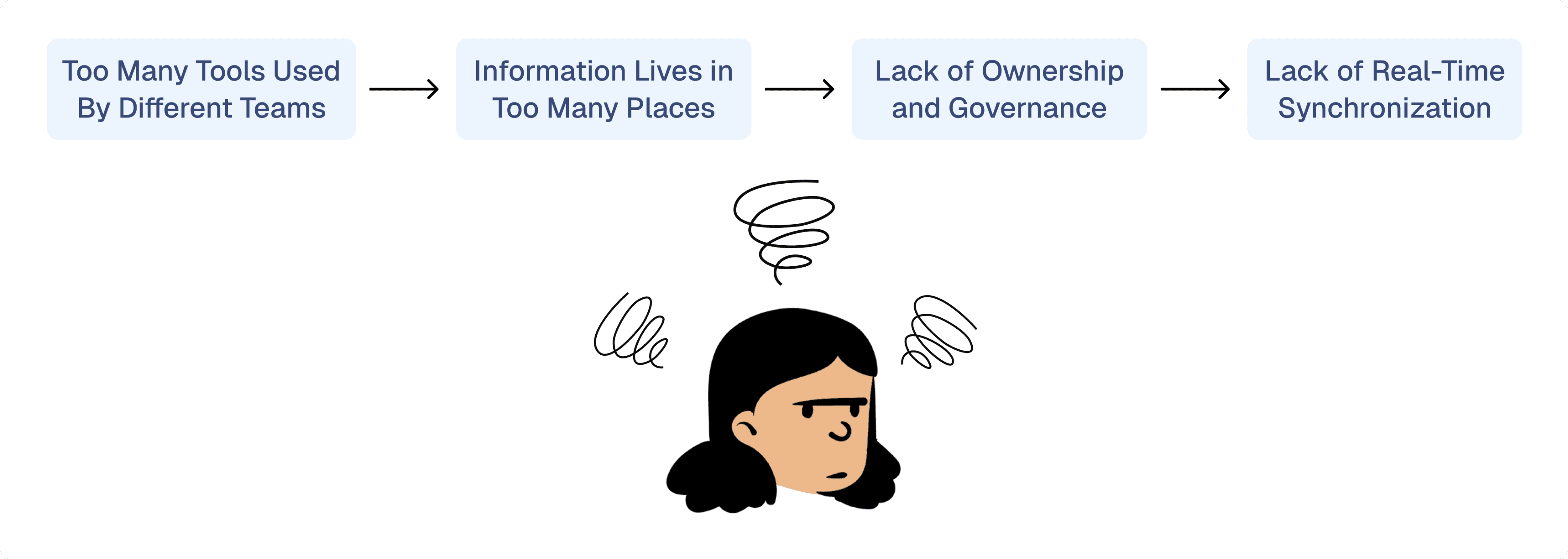

I initially aimed to solve the problem of maintaining a single source of truth
I realized this goal had too many limitations and constraints that couldn't be addressed within Slack's ecosystem alone.
I initially aimed to solve the problem of maintaining a single source of truth
I realized this goal had too many limitations and constraints that couldn't be addressed within Slack's ecosystem alone.

I wanted to focus on problems that I could solve within Slack’s ecosystem
I wanted to focus on minimizing the gap of a single source of truth. I realized that there was another problem that users were dealing with on a day to day basis inside of Slack’s ecosystem.
I wanted to focus on problems that I could solve within Slack’s ecosystem
I wanted to focus on minimizing the gap of a single source of truth. I realized that there was another problem that users were dealing with on a day to day basis inside of Slack’s ecosystem.
REFRAMING THE PROBLEM
Slack makes it easy to communicate — but hard to track responsibility.
Slack makes it easy to communicate — but hard to track responsibility.
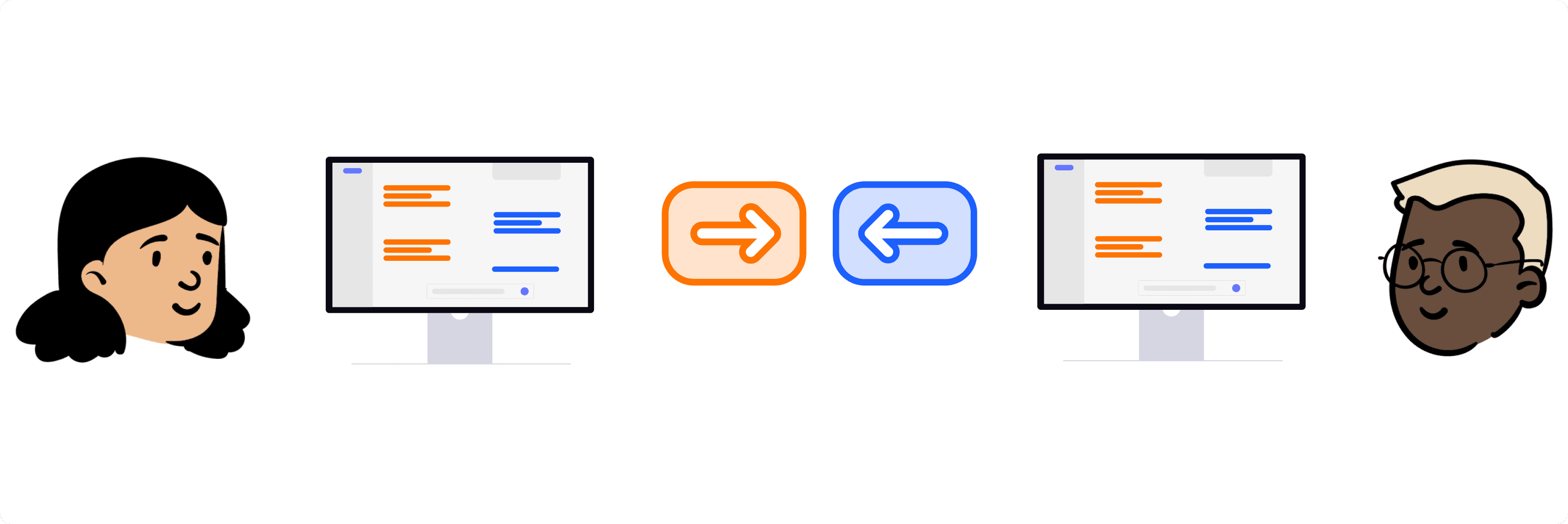
Work gets assigned in Slack DMs and threads — but there’s no reliable way to track who owns what.
Aaron
SENIOR PRODUCT MANAGER
When my manager delegates tasks to me, other team members often aren't aware of the transition, so they don't realize I'm now the owner of that work
Aaron
SENIOR PRODUCT MANAGER
When my manager delegates tasks to me, other team members often aren't aware of the transition, so they don't realize I'm now the owner of that work
Aaron
SENIOR PRODUCT MANAGER
When my manager delegates tasks to me, other team members often aren't aware of the transition, so they don't realize I'm now the owner of that work
Eric
SENIOR PRODUCT MANAGER
My manager assigns me tasks in Slack, but no one else knows I’m now the owner — everyone still goes to my manager for updates
Eric
SENIOR PRODUCT MANAGER
My manager assigns me tasks in Slack, but no one else knows I’m now the owner — everyone still goes to my manager for updates
Eric
SENIOR PRODUCT MANAGER
My manager assigns me tasks in Slack, but no one else knows I’m now the owner — everyone still goes to my manager for updates
Before moving onto any designs, I wanted create some goals that I could reference throughout my design process.

For complementing existing tools
For complementing existing tools
For complementing existing tools
To support users in their natural work patterns
To support users in their natural work patterns
To support users in their natural work patterns
To make responsibilities in Slack more visible
To make responsibilities in Slack more visible
To make responsibilities in Slack more visible
Even though teams rely on Slack to communicate, it wasn’t built to track responsibility. Through research, I uncovered several underlying issues that explain why ownership becomes unclear.
Even though teams rely on Slack to communicate, it wasn’t built to track responsibility. Through research, I uncovered several underlying issues that explain why ownership becomes unclear.

1.
Conversations happen everywhere — but work lives nowhere.
Slack is where tasks get discussed, delegated, and clarified… → No single place captures the full picture of the work
1.
Conversations happen everywhere — but work lives nowhere.
Slack is where tasks get discussed, delegated, and clarified… → No single place captures the full picture of the work
1.
Conversations happen everywhere — but work lives nowhere.
Slack is where tasks get discussed, delegated, and clarified… → No single place captures the full picture of the work

2.
Critical information gets buried in threads.
Slack’s fast-moving channels make it easy for key decisions, owners, and next steps to disappear under unread messages.
2.
Critical information gets buried in threads.
Slack’s fast-moving channels make it easy for key decisions, owners, and next steps to disappear under unread messages.
2.
Critical information gets buried in threads.
Slack’s fast-moving channels make it easy for key decisions, owners, and next steps to disappear under unread messages.

3.
Work is delegated informally, making it hard to track.
People often assign tasks through casual language, screenshots, or shared links.
3.
Work is delegated informally, making it hard to track.
People often assign tasks through casual language, screenshots, or shared links.
3.
Work is delegated informally, making it hard to track.
People often assign tasks through casual language, screenshots, or shared links.
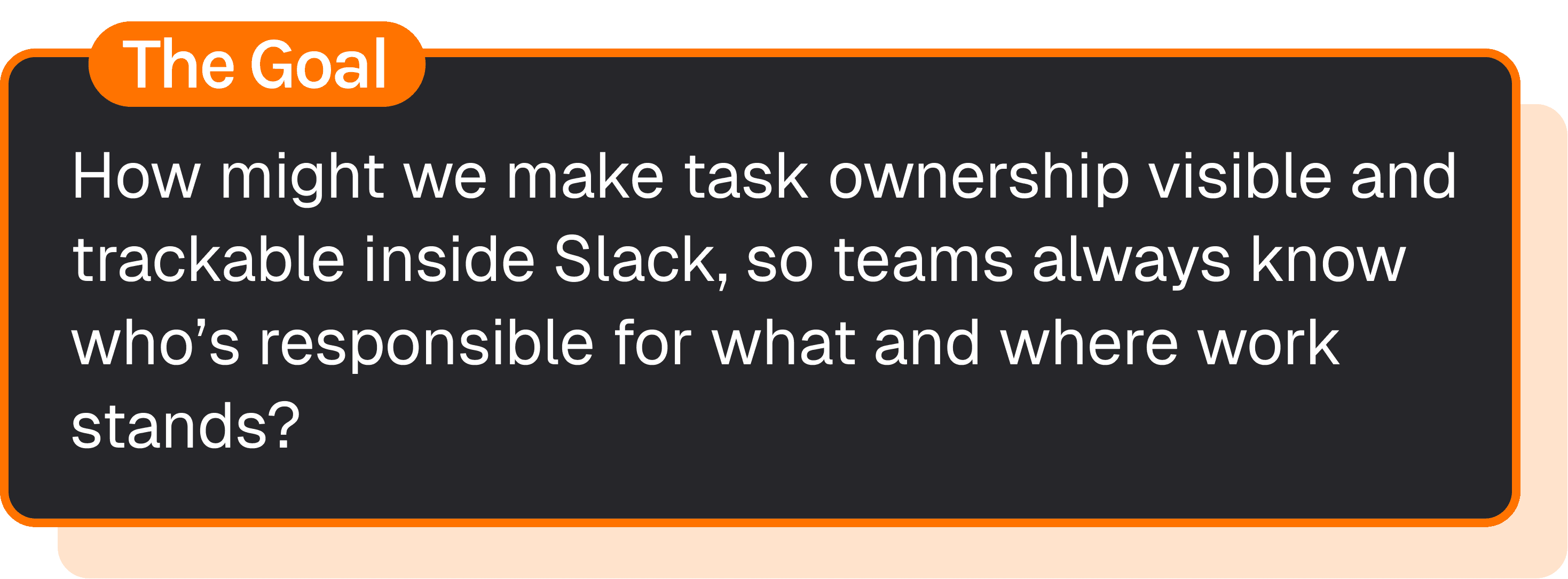
To ensure the solution felt native to Slack and solved the real workflow gaps, I defined a set of principles to guide every design decision.
To ensure the solution felt native to Slack and solved the real workflow gaps, I defined a set of principles to guide every design decision.

Visibility
People often assign tasks through casual language, screenshots, or shared links.
Visibility
People often assign tasks through casual language, screenshots, or shared links.
Visibility
People often assign tasks through casual language, screenshots, or shared links.
Low friction
People often assign tasks through casual language, screenshots, or shared links.
Low friction
People often assign tasks through casual language, screenshots, or shared links.
Low friction
People often assign tasks through casual language, screenshots, or shared links.
Stay in the flow
Users shouldn’t have to leave Slack or switch tools to understand what’s happening.
Stay in the flow
Users shouldn’t have to leave Slack or switch tools to understand what’s happening.
Stay in the flow
Users shouldn’t have to leave Slack or switch tools to understand what’s happening.
Shared understanding
Everyone — not just managers — should know who owns what and what changed.
Shared understanding
Everyone — not just managers — should know who owns what and what changed.
Shared understanding
Everyone — not just managers — should know who owns what and what changed.
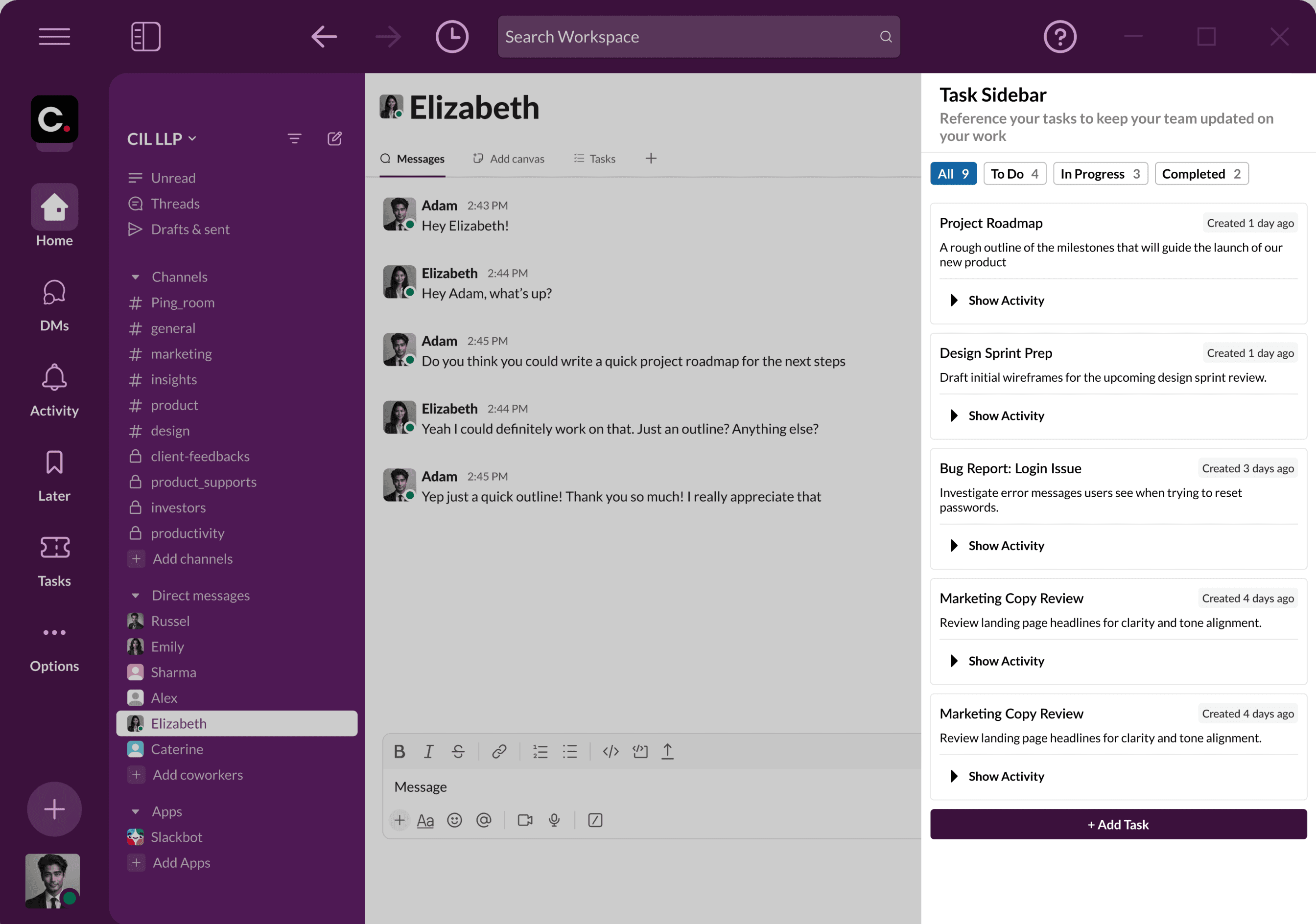
A centralized space that brings clarity to Slack conversation
A centralized space that brings clarity to Slack conversation
1
1
Keeps all tasks visible in one place so users don’t lose work in channels or DMs.
Keeps all tasks visible in one place so users don’t lose work in channels or DMs.
2
2
Groups tasks into All / To Do / In Progress / Completed for quick scanning and prioritization.
Groups tasks into All / To Do / In Progress / Completed for quick scanning and prioritization.
3
3
Lets users see key task details at a glance and expand to view the full Slack conversation for context.
Lets users see key task details at a glance and expand to view the full Slack conversation for context.
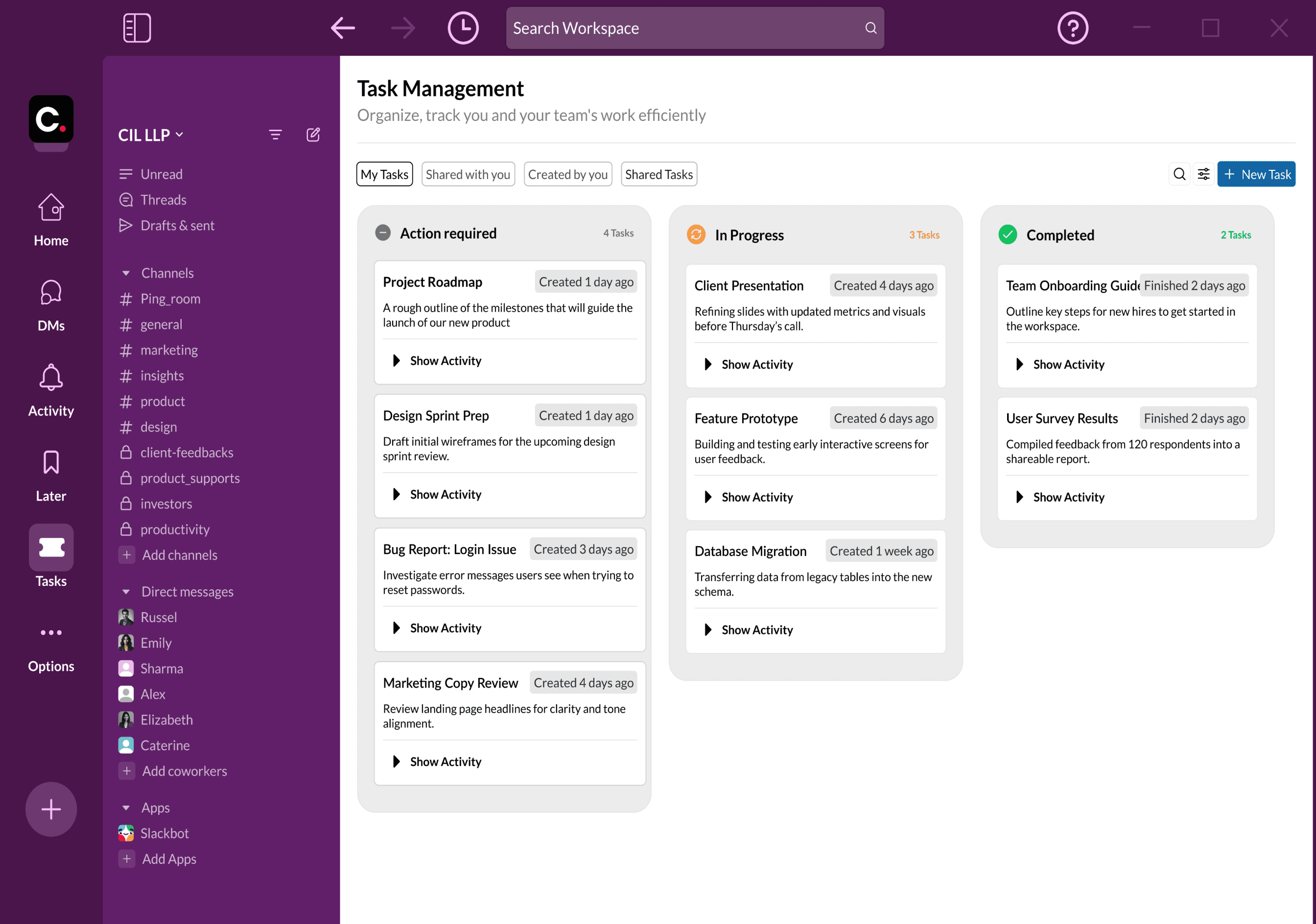
A unified task board that organizes your team’s work with clarity
1
Provides a Kanban-style layout that groups tasks by status, helping users quickly track progress across their entire workflow.
2
Gives teams a centralized overview of all tasks segmented by status, making it easy to see what needs attention right now.
3
Visually separates tasks by their stage in the workflow, reducing confusion and improving team alignment.
A unified task board that organizes your team’s work with clarity
1
Provides a Kanban-style layout that groups tasks by status, helping users quickly track progress across their entire workflow.
2
Gives teams a centralized overview of all tasks segmented by status, making it easy to see what needs attention right now.
3
Visually separates tasks by their stage in the workflow, reducing confusion and improving team alignment.
REFLECTING ON THIS PROJECT
There are a couple of things that I learned throughout this project that I would like to reflect on in order to apply apply what Iearned into my next project.
There are a couple of things that I learned throughout this project that I would like to reflect on in order to apply apply what Iearned into my next project.

Diving deeper and understanding the problem scope
One of the biggest setbacks of this project was not understanding the full scope. At first, my team and I jumped into this project thinking that we could tackle the entire “source of truth” issue. Looking back, if we had taken the time to step back and assess the full picture earlier, we could’ve focused on a more manageable scope from the start — ultimately saving ourselves hours of time and effort.